Double Diamonds are a Designer’s Best Friend

Hey, there junior designers!
Have you heard of the Double Diamond design process? No? Well, let me fill you in.
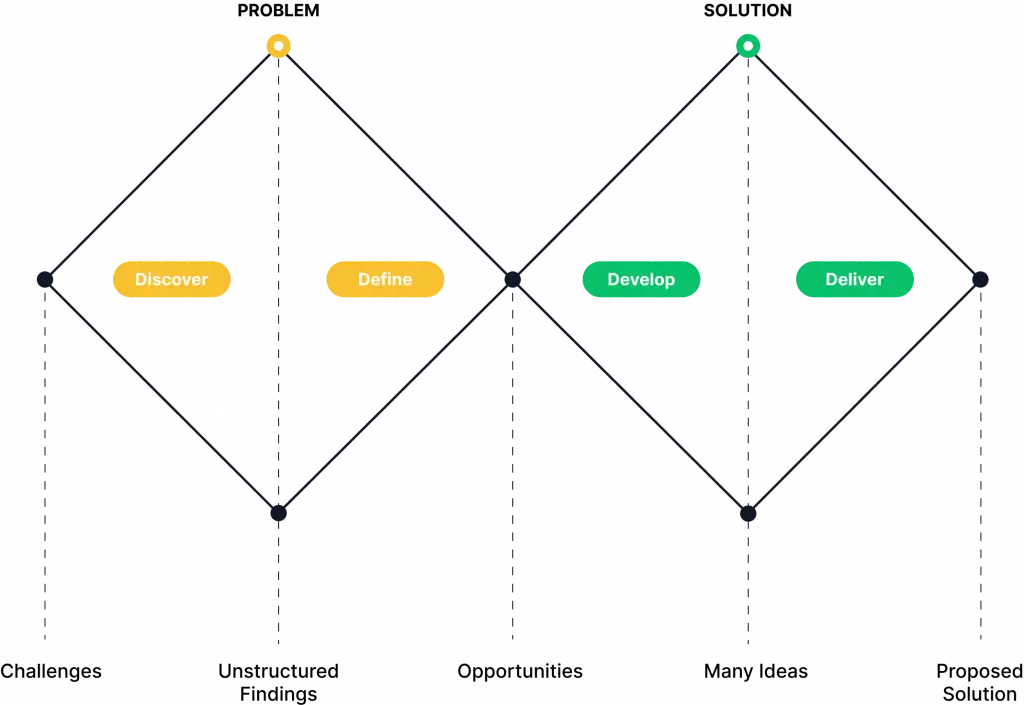
The Double Diamond design process is a framework that helps designers think through and solve complex problems. It was developed by the British Design Council and has become a widely used method in the design industry.
The Double Diamond process is called as such because it is divided into four phases, each represented by a diamond shape. These four phases are: Discover, Define, Develop, and Deliver.
Phase 1: Discover
The first diamond represents the discovery phase, where designers gather information about the problem they are trying to solve. This involves conducting research, such as interviews and surveys, and analyzing data to understand the needs and wants of the users.
Phase 2: Define
The second diamond represents the define phase, where designers synthesize the information they gathered in the first phase and define the problem they are trying to solve. This phase also involves identifying the key challenges and opportunities that will shape the design solution.
Phase 3: Develop
The third diamond represents the development phase, where designers begin to generate ideas and prototypes to solve the problem defined in the second phase. This phase is all about exploration and experimentation, and it is important for designers to keep an open mind and not be afraid to try out different approaches.
Phase 4: Deliver
The fourth diamond represents the delivery phase, where designers finalize their design solution and prepare it for launch. This phase involves testing the design with users, making any necessary adjustments, and getting the design ready for implementation.
And there you have it – the Double Diamond design process in a nutshell! This process may seem a bit intimidating initially, but it is a very helpful tool for designers to use when tackling complex problems. It helps to structure the design process and ensure that all key considerations are taken into account.
One thing to keep in mind is that the Double Diamond process is not a linear one. It is more of a cyclical process, where designers may find themselves going back and forth between phases as they gather more information, generate new ideas, and refine their design solutions.
It is also important to remember that the Double Diamond process is not just for designers – it is a collaborative process that involves input and feedback from a variety of stakeholders, including clients, users, and subject matter experts. Involving these diverse perspectives can help to ensure that the design solution addresses the needs and wants of all stakeholders.
Another important aspect of the Double Diamond process is the use of prototyping. Prototyping allows designers to test their design ideas and gather feedback from users, which can be extremely valuable in the development phase. Prototyping can range from rough sketches on paper to fully functional digital prototypes, depending on the needs of the project.
So there you have it – a bit more about the Double Diamond design process. We hope this has been helpful for you junior designers out there! Remember, the Double Diamond process is a useful tool for tackling complex design problems, and it is all about collaboration, exploration, and testing. Happy designing!